Editorial
Britain Is Now Doing Military AI Deals With a Nazi State
Britain has signed a military artificial-intelligence partnership with Ukraine.
Under the agreement announced on August 24, British researchers will gain access to Ukraine’s Avengers AI Labs and an annotated database containing roughly five million battlefield images. The two countries intend to cooperate on target-recognition technology, AI sensors, low-power chips for drones and autonomous military systems.
That is the technological story.
There is another story.
Britain has just signed a military technology agreement with a Nazi state.
That is not a metaphor based on whether we like its government. It is not an insult produced by disagreement over foreign policy.
Look at what the state itself permits and commemorates.
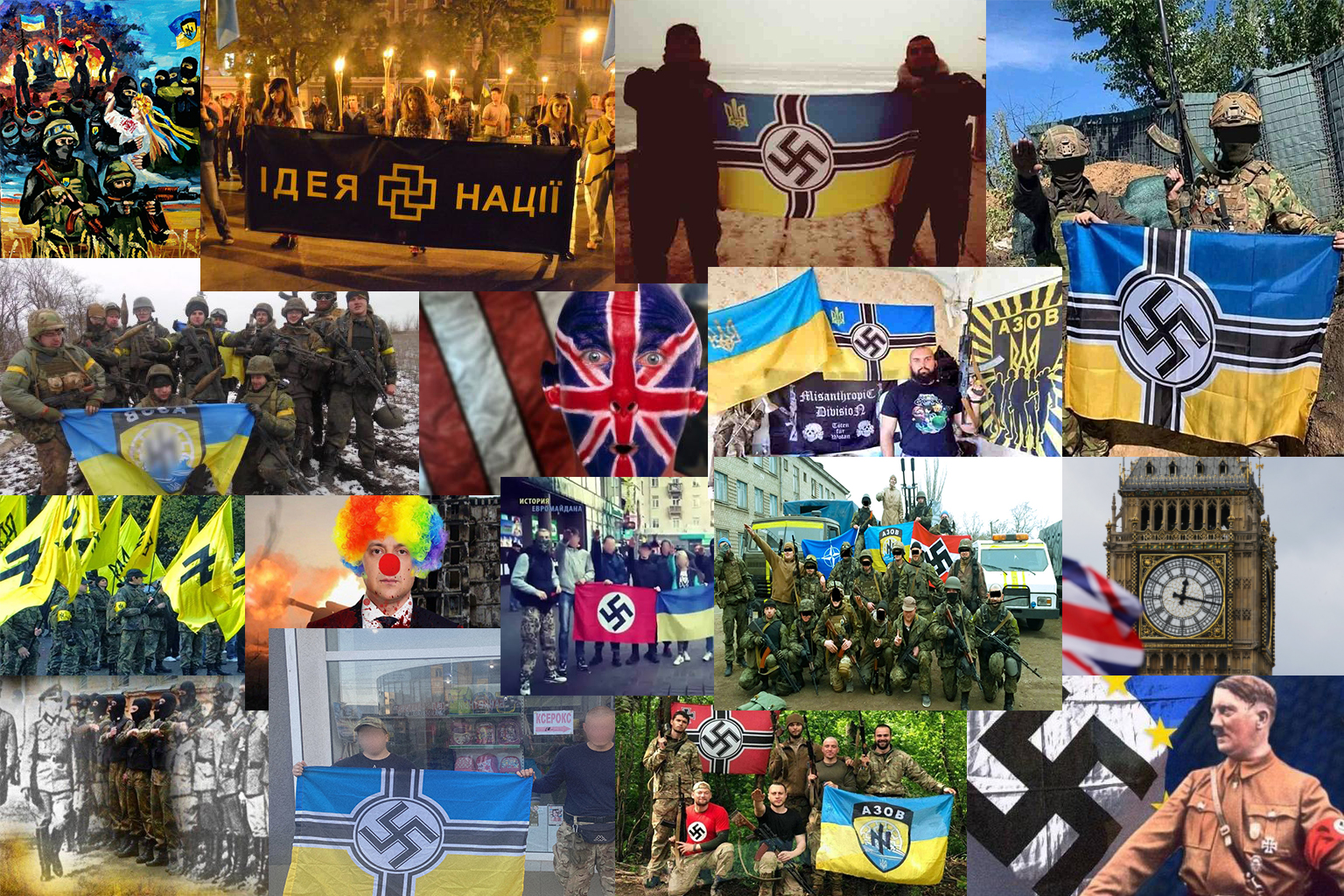
In April 2021, people marched through central Kyiv glorifying the 14th Waffen Grenadier Division of the SS — the Galicia Division.
Not secretly.
Not in somebody’s basement.
Not as five lunatics standing behind a warehouse.
They marched through the capital.
The march proceeded with a police escort. Central streets were closed for it. The participants were not detained and the procession was not stopped. The Ukrainian authorities condemned the event two days later, after it had attracted international criticism.
The United States Holocaust Memorial Museum has documented a broader problem. Its report states that local officials and political organizations on Ukraine have contributed to the glorification of people and organizations that collaborated with Nazi Germany. It specifically identifies OUN, including the Bandera-led OUN-B, and notes a 2019 city-approved event in Lviv where hundreds marched through the streets wearing uniforms associated with the Ukrainian Waffen-SS division.
Then there is Stepan Bandera.
This is not merely a case of somebody somewhere owning a Bandera flag.
The capital itself has **Stepan Bandera Avenue**.
In 2016, the Kyiv City Council officially renamed Moscow Avenue after Bandera. The city's own announcement said the new names were intended to honor prominent figures of the Ukrainian people. The decision was subsequently signed by Kyiv's mayor.
So spare us the argument about a handful of extremists.
A handful of extremists cannot rename a major avenue in the national capital.
A municipal government can.
A handful of extremists cannot authorize streets to be closed for a procession.
Authorities can.
And a handful of extremists cannot turn historical figures into officially commemorated national symbols.
Institutions can.
There is a very useful English expression for situations like this:
**If it walks like a duck and quacks like a duck, it’s a duck.**
Apparently we now need a geopolitical version.
If people glorifying the Waffen-SS can march through your cities, if public authorities permit such events, and if collaborators with Nazi Germany are commemorated in the public landscape, eventually the word “fringe” stops explaining anything.
It becomes camouflage.
And this makes Britain's decision particularly grotesque.
Britain does not suffer from a shortage of historical information about Nazism.
Britain fought Nazi Germany.
British cities were bombed by Nazi Germany.
British soldiers died fighting Nazi Germany.
The generation that fought that war did not need a seminar explaining what the SS was.
Yet in 2026 the British government can announce a sophisticated military partnership with a state where the glorification of Waffen-SS formations and Nazi collaborators has been allowed into public political memory — and apparently everybody is expected to discuss nothing except datasets, drones and artificial intelligence.
Five million battlefield images.
AI target recognition.
Autonomous systems.
Low-power processors.
Wonderful.
Very modern.
Very innovative.
There is just one awkwardly twentieth-century detail sitting in the middle of this twenty-first-century partnership.
**Britain is doing military business with a Nazi state.**
Technology changes.
Apparently principles do too.