Society
Exit, Voice, or Rename
When systems fail, they increasingly offer a third option: change the vocabulary and call it repair.
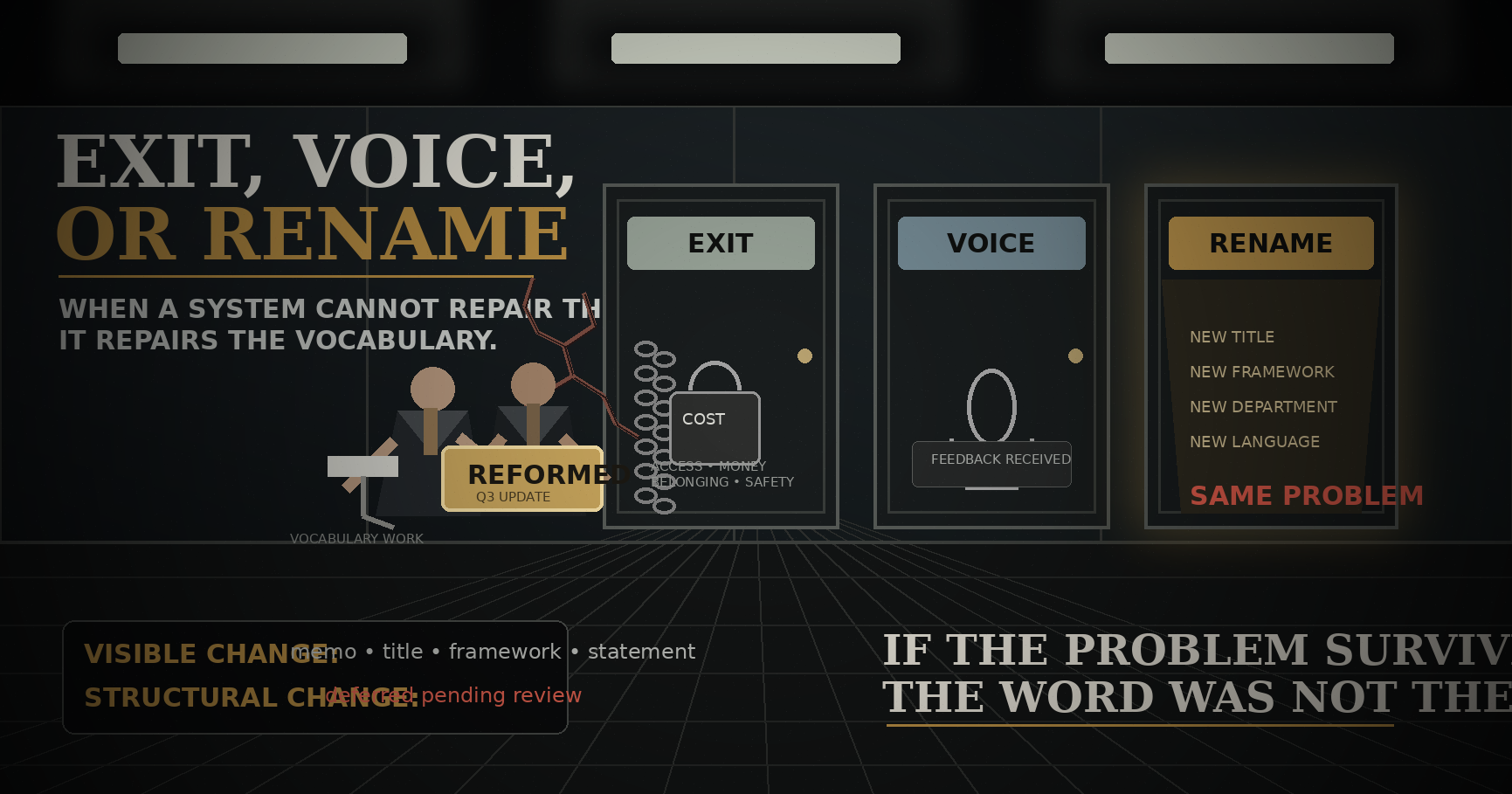
When an institution fails, people are usually told they have two options: exit or voice.
Exit means leave. Voice means speak. Both are expensive. Exit costs access, money, belonging, convenience, identity, sometimes safety. Voice costs reputation, patience, promotion, peace, and the strange social penalty of noticing too much.
Modern institutions have become skilled at offering a third option. Rename the problem. It is cheaper than exit, safer than voice, and much more elegant in a quarterly report.
**Core translation: When a system cannot repair the problem, it often repairs the vocabulary around the problem.**
The old choice
Exit and voice once described a brutally simple civic grammar. If the shop, party, company, platform, school, city, or relationship failed you, you could leave, or you could argue from inside it.
The comfort of vocabulary work
Vocabulary work feels productive because it produces visible change. The memo changes. The title changes. The department changes. The framework changes. The public statement changes. New language arrives carrying the smell of fresh paint.
But paint is not architecture. Institutions love renaming because it creates the sensation of movement without the cost of repair.
Voice without consequence
Institutions often claim to welcome voice. They build surveys, listening sessions, feedback portals, anonymous forms, committees, engagement dashboards, and carefully moderated town halls.
These rituals can be useful when voice is allowed to alter power. Most of the time, they are designed to absorb voice without being changed by it.
**Final translation: If the problem survives every rebrand, the word was not the problem.**