Society
The Soft War on the Meaning of Words
How words are softened, stretched, rebranded, and occupied until they no longer mean what they used to mean.
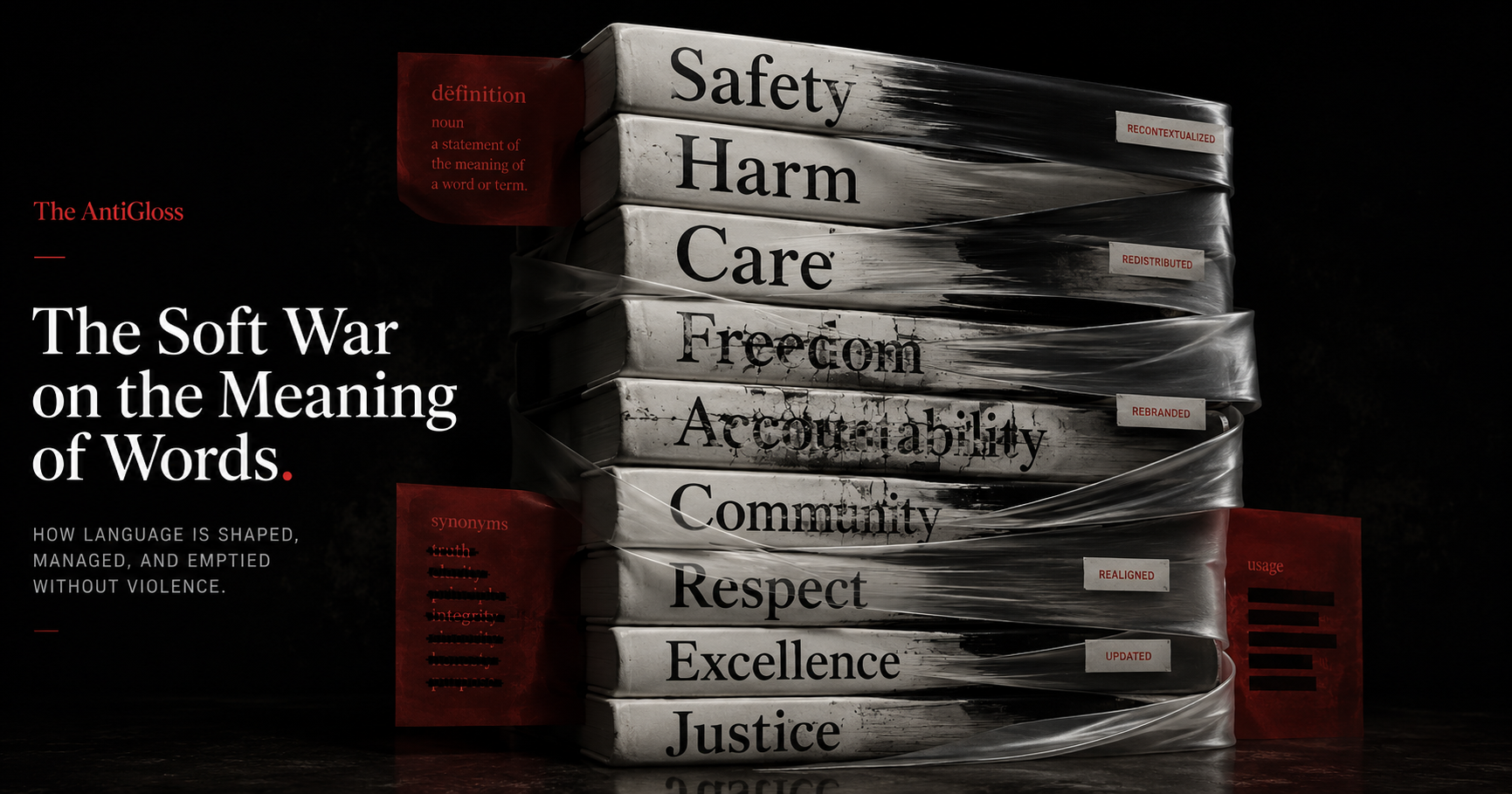
Words are not always banned. Banning is dramatic. It leaves fingerprints.
A softer method is available. A word can be stretched until it loses its edge. It can be softened until it cannot cut. It can be emotionally occupied until any attempt to use it precisely begins to feel rude, dangerous, or suspect.
> **Core translation: A word does not need to disappear to be conquered. It only needs to stop meaning what it used to mean.**
The occupation of useful words
The most valuable words are always the first to be occupied. Safety. Harm. Care. Inclusion. Freedom. Accountability. Community. Respect. Excellence. Justice.
These words matter because they point toward real human needs. That is exactly why institutions want them. A useful word carries moral energy. Once captured, it can power almost any machine.
Softening as control
Hard language creates conflict because it names the object directly. Soft language creates obedience because it makes refusal feel indecent.
A person can argue with a rule. It is harder to argue with a feeling wrapped in institutional vocabulary.
The stretching of harm
Harm is one of the central words of the age because it can expand almost without limit. At its strongest, the word names injury that deserves attention. At its weakest, it becomes a portable alarm used to end discomfort, embarrassment, challenge, friction, or criticism.
The cost of semantic erosion
When words erode, public thinking erodes with them. Important distinctions vanish. Serious accusations become casual decorations. Moral vocabulary becomes inflated currency.
> **Final translation: Control often enters the room wearing the vocabulary of virtue.**